
Abstract
Background Timely access to a neurologist is essential for optimal management of acute stroke. To address disparities in neurological care within the SEHA Healthcare Network, the LEO360® AI-assisted tele-stroke robot was implemented at Sheikh Tahnoon bin Mohammed Medical City (STMC) and Al Tawam Hospital.
Methods This case series presents six patients evaluated remotely via the LEO360® platform. Key metrics included consultation time, transfer rates, and system performance. Data were contextualized using pre-implementation benchmarks, and both AI functionalities and telepresence capabilities were analyzed. Challenges, ethical considerations, and system limitations were also examined.
Results The average neurologist consultation time was 10.7 minutes. In 80% of cases, unnecessary interfacility transfers were avoided. The integration of AI-assisted decision support enhanced assessment efficiency and diagnostic confidence.
Conclusion The LEO360® tele-stroke system demonstrates strong potential to improve access, efficiency, and accuracy in acute stroke management. Its successful implementation underscores the scalability of AI-assisted telemedicine in regions facing neurology workforce shortages, offering a sustainable model for acute neurological care.
Introduction
Acute ischemic stroke remains a leading cause of mor-bidity worldwide, with outcomes heavily dependent on timely neurologist input and rapid intervention [1]. In the UAE, the neurologist-to-patient ratio remains sig- nificantly below international recommendations, with an estimated shortage of vascular neurologists outside urban centers. Many patients in remote or rural areas face substantial delays, often requiring over 60–90 min of travel to reach stroke-ready hospitals that are equipped for neuroimaging, thrombolysis, or thrombectomy. The challenges in service delivery are multifactorial, including a limited number of neurologists, variability in ambulance services, and unequal access to advanced neuro-radiologic imaging and dedicated stroke units.
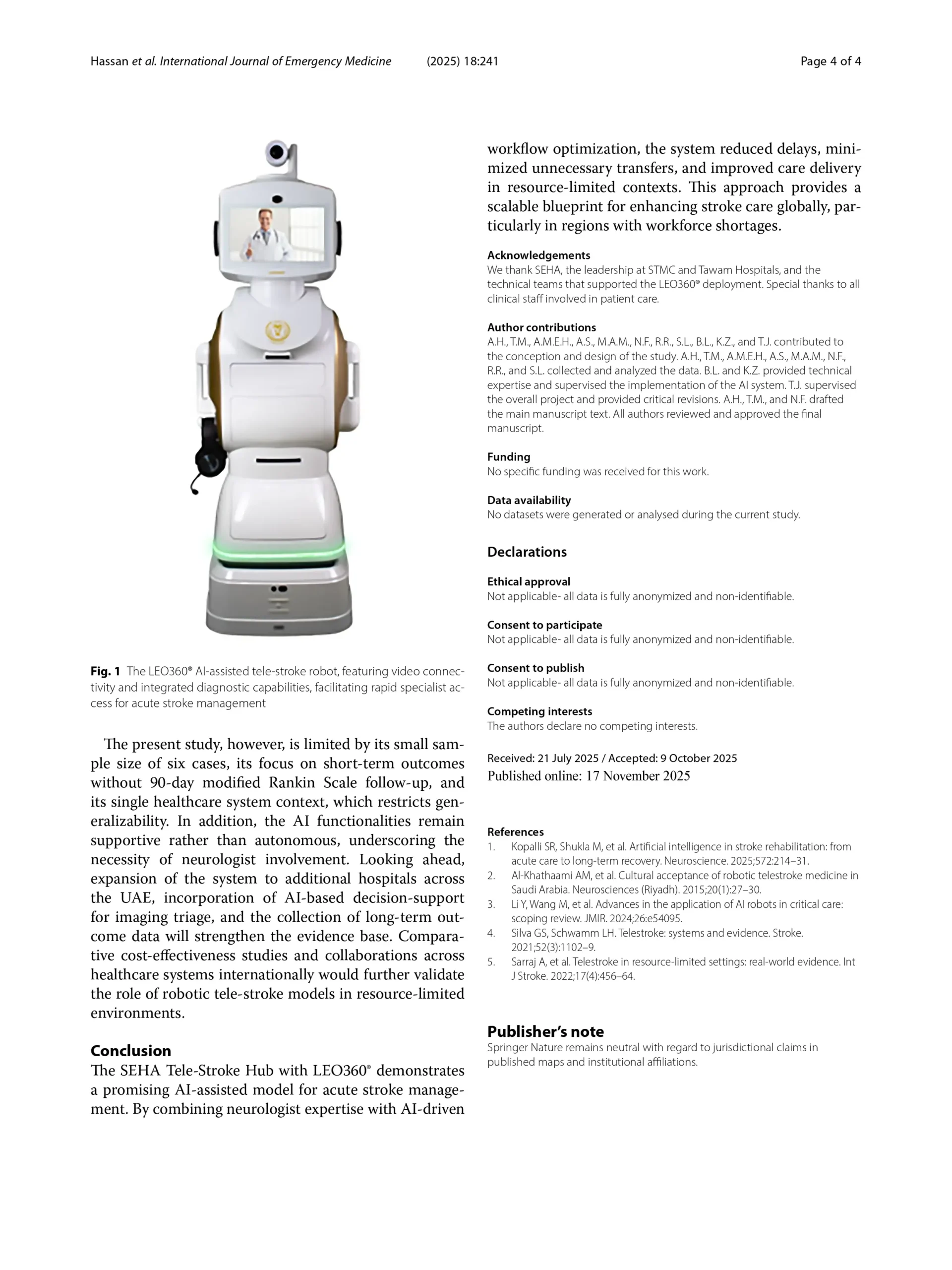
To address these disparities, SEHA launched the first AI-assisted Tele-Stroke Hub in the UAE using the LEO360® system. LEO360® is a physician-controlled robotic device that integrates high-resolution video assessment, automated workflow alerts, EMR/PACS connectivity, and more than 16 diagnostic tools capable of capturing 63 clinical parameters. While AI supports workflow optimization and data synthesis, the neuro-logical examination itself is conducted in real time by remote specialists. Similar tele-stroke technologies have been reported internationally [2] and in neighboring Gulf states [3], showing reduced treatment delays and improved access to neurologists.
Methods
LEO360® was deployed at STMC and Al Tawam Hospital in January 2025. Structured training was provided to 56 nurses, 30 emergency medicine physicians, and 11 neu-rologists. Training included stroke code activation, robot operation, troubleshooting, and integration of the system into hospital workflows.
With regard to ethics, every patient or next of kin pro- vided consent for remote robotic evaluation at the time of stroke code activation. Neurologists participated under a formal agreement with SEHA, ensuring continuous coverage by 11 specialists on rotation. The system was designed as an AI-assisted platform in which automated
alerts, imaging integration, and workflow coordination are AI-driven, but the neurological examination and final clinical judgment remain entirely under the control of the neurologist. Patient data were anonymized for reporting in this study, and the process complied with local ethical oversight requirements.
Six consecutive suspected stroke patients presenting between January and April 2025 were included. Data collected included time to neurologist, NIHSS scores, door-to-imaging and door-to-needle intervals, diagnosis, intervention, and clinical outcome. Historical records of neurologist response times, which exceeded 40 min prior to LEO360®, and baseline transfer rates of 60% were used for comparison.
Case presentations
All six cases demonstrated acute neurological assessment using LEO360®. The system enabled timely differentiation of stroke from mimics such as vertigo and migraine, while also allowing rapid recognition of arteriovenous malformations and lacunar infarcts. Across the series, the technology supported acute decision-making, avoided unnecessary transfers in 80% of patients, and achieved high satisfaction among staff and patients. Follow-up assessments included NIHSS scoring, imaging interpretation, and clinical monitoring.
Case A
An elderly female who had recently traveled from India to the UAE presented to Al Tawam Hospital with sudden onset dizziness and left-sided numbness. Upon arrival at the Emergency Department, a stroke code was activated, and a neurologist was connected remotely via the LEO360® AI robot within 11 min. A detailed neurological
examination was conducted remotely. CT and MRI imaging revealed a large arteriovenous malformation (AVM) with early ischemic changes in the left frontal lobe. The neurologist initiated an urgent care plan, and the patient was admitted to the stroke unit for further evaluation and management. This case illustrates the effectiveness of the LEO360® platform in providing immediate expert assessment and facilitating early intervention in complex neurovascular cases.
Case B
A 52-year-old male with no significant medical history presented to Tawam Hospital Emergency at 4:20 AM with acute vertigo, persistent vomiting, and difficulty standing since 11:30 PM. He reported a history of similar episodes in the past week. The neurology team assessed the patient remotely via the LEO360® AI robot within 10 min of arrival. NIHSS score was zero. CT and CTA imaging showed no acute insult. The clinical impression was peripheral vertigo, but posterior circulation stroke needed to be ruled out. The neurologist initiated aspirin 300 mg immediately, and the patient was admitted to STMC’s stroke unit for further work-up and MRI. This rapid expert evaluation via LEO360® ensured timely diagnosis, mitigation of stroke risk, and effective symptom management.
Case C
A 36-year-old male presented to STMC with acute onset severe occipital headache, left arm numbness and weakness, vomiting, and blurred vision. The ED Triage Nurse activated stroke code at 10:14 PM. The neurologist remotely assessed the patient via LEO360® AI robot. The Neurologic exam was notable for a mild hand drift but otherwise intact strength and function. NIHSS was 0. CT and CTA were unremarkable for hemorrhage or infarction. MRI confirmed no acute stroke, and the final diagnosis was a possible hemiplegic migraine versus TIA. An incidental azygos fissure was noted on chest CT. The Neurologist managed the patient conservatively with aspirin, atorvastatin, and migraine medications. LEO360® enabled a rapid and accurate diagnosis, avoiding unnecessary intervention and enabling safe discharge with follow-up in the stroke clinic.
Case D
A 66-year-old male with a known history of hypertension, diabetes mellitus, and dyslipidemia presented to STMC with sudden onset of left-sided weakness while in his car. Stroke code was activated at 06:38 PM. Upon arrival to the ED, the patient was awake, responsive, with intact speech and no facial droop. Coordination testing revealed left-sided overshoot, and pronator drift was present. NIHSS score was 4. The LEO360® AI robot enabled remote evaluation by a neurologist within 11 min. Imaging revealed a large arteriovenous malformation (AVM) in the left frontal lobe, confirmed byMRA. No evidence of acute hemorrhage or infarction was found. The patient was admitted for stroke unit monitoring and further evaluation. Early identification of the AVM and appropriate triage through LEO360® prevented deterioration and avoided misdiagnosis, enabling targeted long-term management.
Case E
A 62-year-old male with no known past medical history, recently arrived from Bangladesh, was found confused in his room at 4 PM after last being seen normal at 10 AM. He had contacted a friend earlier in the day reporting dizziness. Upon arrival to the ED, he was confused, aphasic, and showed right facial droop with NIHSS score of 13. The stroke code was activated at 07:24 PM. Using the LEO360® AI robot, the neurologist performed an immediate remote evaluation. Imaging showed no acute hemorrhage or major vessel occlusion. The patient was managed as a large vessel stroke mimic or evolving event, with further observation and supportive care. LEO360® enabled rapid stroke assessment, timely exclusion of hemorrhagic stroke, and expedited admission to the stroke unit for continued monitoring and treatment.
Case F
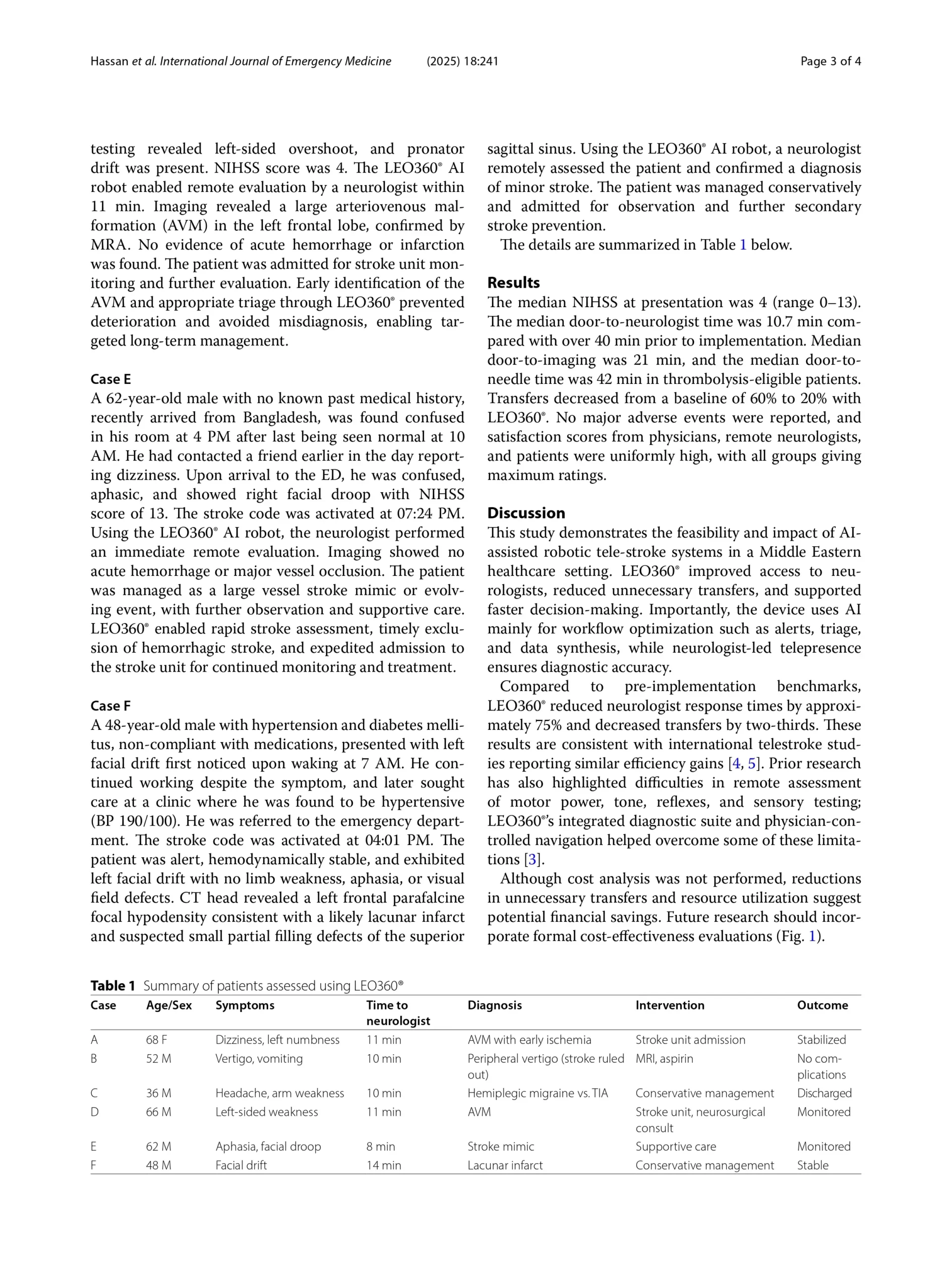
A 48-year-old male with hypertension and diabetes mellitus, non-compliant with medications, presented with left facial drift first noticed upon waking at 7 AM. He continued working despite the symptom, and later sought care at a clinic where he was found to be hypertensive (BP 190/100). He was referred to the emergency department. The stroke code was activated at 04:01 PM. The patient was alert, hemodynamically stable, and exhibited left facial drift with no limb weakness, aphasia, or visual field defects. CT head revealed a left frontal parafalcine focal hypodensity consistent with a likely lacunar infarct and suspected small partial filling defects of the superior sagittal sinus. Using the LEO360® AI robot, a neurologist remotely assessed the patient and confirmed a diagnosis of minor stroke. The patient was managed conservatively and admitted for observation and further secondary stroke prevention. The details are summarized in Table 1 below.
Results
The median NIHSS at presentation was 4 (range 0–13). The median door-to-neurologist time was 10.7 min compared with over 40 min prior to implementation. Median door-to-imaging was 21 min, and the median door-to-needle time was 42 min in thrombolysis-eligible patients. Transfers decreased from a baseline of 60% to 20% with LEO360®. No major adverse events were reported, and satisfaction scores from physicians, remote neurologists, and patients were uniformly high, with all groups giving maximum ratings.
Discussion
This study demonstrates the feasibility and impact of AI- assisted robotic tele-stroke systems in a Middle Eastern healthcare setting. LEO360® improved access to neurologists, reduced unnecessary transfers, and supported faster decision-making. Importantly, the device uses AI mainly for workflow optimization such as alerts, triage, and data synthesis, while neurologist-led telepresence ensures diagnostic accuracy.
Compared to pre-implementation benchmarks, LEO360® reduced neurologist response times by approximately 75% and decreased transfers by two-thirds. These results are consistent with international telestroke studies reporting similar efficiency gains [4, 5]. Prior research has also highlighted difficulties in remote assessment of motor power, tone, reflexes, and sensory testing; LEO360®’s integrated diagnostic suite and physician-con-trolled navigation helped overcome some of these limitations [3].
Although cost analysis was not performed, reductions in unnecessary transfers and resource utilization suggest potential financial savings. Future research should incorporate formal cost-effectiveness evaluations (Fig. 1).
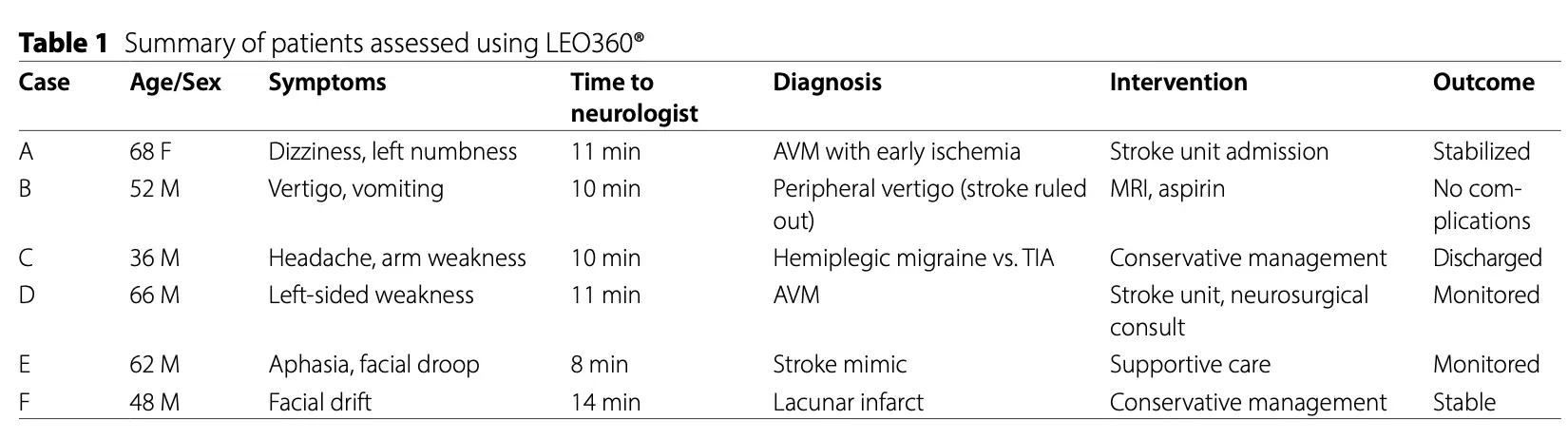
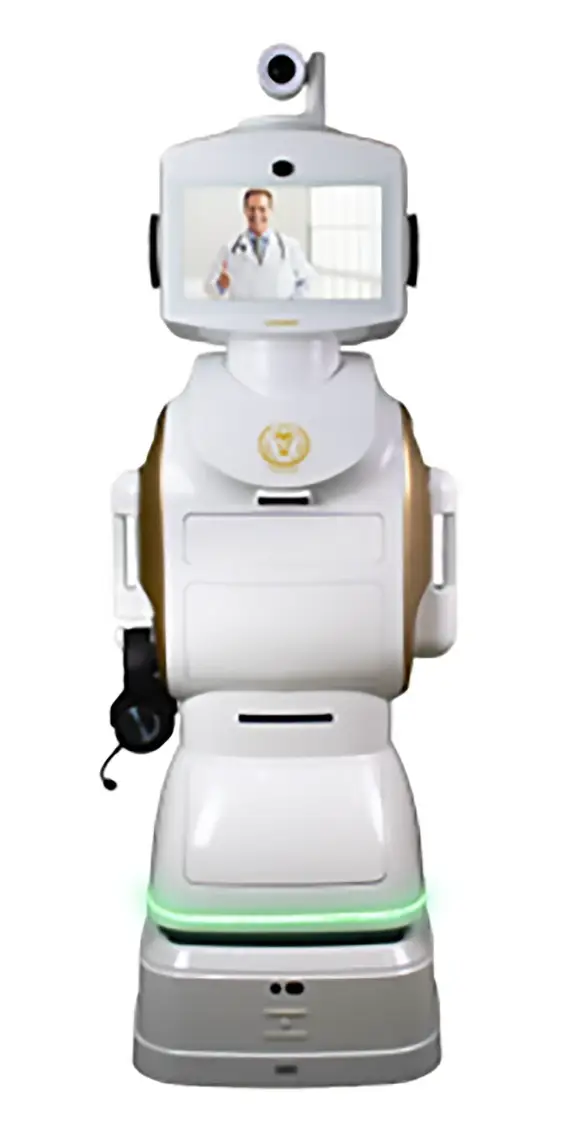
Fig. 1 The LEO360® AI-assisted tele-stroke robot, featuring video connectivity and integrated diagnostic capabilities, facilitating rapid specialist access for acute stroke management
The present study, however, is limited by its small sample size of six cases, its focus on short-term outcomes without 90-day modified Rankin Scale follow-up, and its single healthcare system context, which restricts generalizability. In addition, the AI functionalities remain supportive rather than autonomous, underscoring the necessity of neurologist involvement. Looking ahead, expansion of the system to additional hospitals across the UAE, incorporation of AI-based decision-support for imaging triage, and the collection of long-term outcome data will strengthen the evidence base. Comparative cost-effectiveness studies and collaborations across healthcare systems internationally would further validate the role of robotic teletroke models in resource-limited environments.
Conclusion
The SEHA Tele-Stroke Hub with LEO360® demonstrates a promising AI-assisted model for acute stroke management. By combining neurologist expertise with AI-driven workflow optimization, the system reduced delays, minimized unnecessary transfers, and improved care delivery in resource-limited contexts. This approach provides a scalable blueprint for enhancing stroke care globally, particularly in regions with workforce shortages.
Acknowledgements
We thank SEHA, the leadership at STMC and Tawam Hospitals, and the technical teams that supported the LEO360® deployment. Special thanks to all clinical staff involved in patient care.
Author contributions
A.H., T.M., A.M.E.H., A.S., M.A.M., N.F., R.R., S.L., B.L., K.Z., and T.J. contributed to the conception and design of the study. A.H., T.M., A.M.E.H., A.S., M.A.M., N.F., R.R., and S.L. collected and analyzed the data. B.L. and K.Z. provided technical expertise and supervised the implementation of the AI system. T.J. supervised the overall project and provided critical revisions. A.H., T.M., and N.F. drafted the main manuscript text. All authors reviewed and approved the final manuscript.
Funding
No specific funding was received for this work.
Data availability
No datasets were generated or analysed during the current study.
Declarations
Ethical approval
Not applicable- all data is fully anonymized and non-identifiable.
Consent to participate
Not applicable- all data is fully anonymized and non-identifiable.
Consent to publish
Not applicable- all data is fully anonymized and non-identifiable.
Competing interests
The authors declare no competing interests.
Received: 21 July 2025 / Accepted: 9 October 2025
References
1. Kopalli SR, Shukla M, et al. Artificial intelligence in stroke rehabilitation: from acute care to long-term recovery. Neuroscience. 2025;572:214–31.
2. Al-Khathaami AM, et al. Cultural acceptance of robotic telestroke medicine in Saudi Arabia. Neurosciences (Riyadh). 2015;20(1):27–30.
3. Li Y, Wang M, et al. Advances in the application of AI robots in critical care: scoping review. JMIR. 2024;26:e54095.
4. Silva GS, Schwamm LH. Telestroke: systems and evidence. Stroke. 2021;52(3):1102–9.
5. Sarraj A, et al. Telestroke in resource-limited settings: real-world evidence. Int J Stroke. 2022;17(4):456–64.
Publisher’s note
Springer Nature remains neutral with regard to jurisdictional claims in published maps and institutional affiliations.